
Late April Frost Causes Incredible Losses for Maryland Farmers
Late April Frost Causes Incredible Losses for Maryland Farmers
By Jeb Burchick
Originally published in the May/June 2026 edition Maryland Farm Bureau's newspaper, The Old Line Farmer.
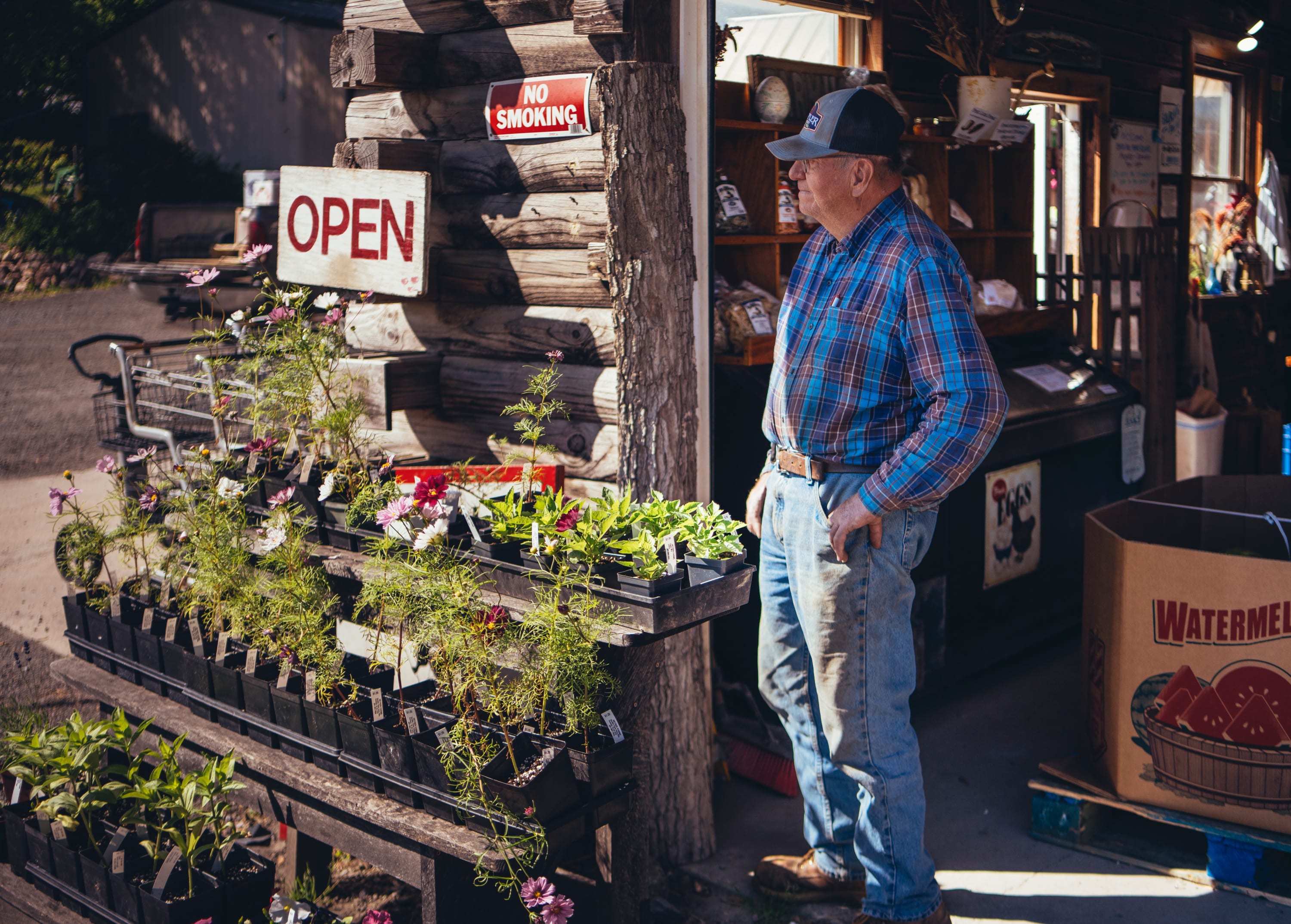
Mike Heyser walks through a small apple orchard behind his family’s farmstand in Silver Spring, Maryland. He stops at a tree, picks a single, tiny bud, and splits it open with his thumbnail. He points to the seeds inside. They are a dull brown. Normally, he remarks, they should be a vibrant white.
It is the color of a harvest that will never happen.
“I’ve never had anything like this before,” says Mike while pulling down a branch to look at the semi-withered buds. “I’ve never had stuff like this.”

An uncharacteristic late frost struck the Mid-Atlantic on April 20th. Many specialty crops had already begun to bud and grow; the combination of the late date and the advanced stage of the plants created a perfect storm for the season’s harvest.
Anne Arundel County vineyard owner Tom Croghan remembers the night of the frost well. Some farms can utilize frost fans, which uses wind power to flow warm air over their crops. Tom is fortunate enough to have one of these, but even then, the weather was too cold to have an effect.
“On the night of the 20th, there was just too much cold air, the fans didn’t help at all,” said Tom. “I came out on the morning of the 21st, and all I saw was dead shoots across the vineyard.”
“There was not a vine that was untouched.”
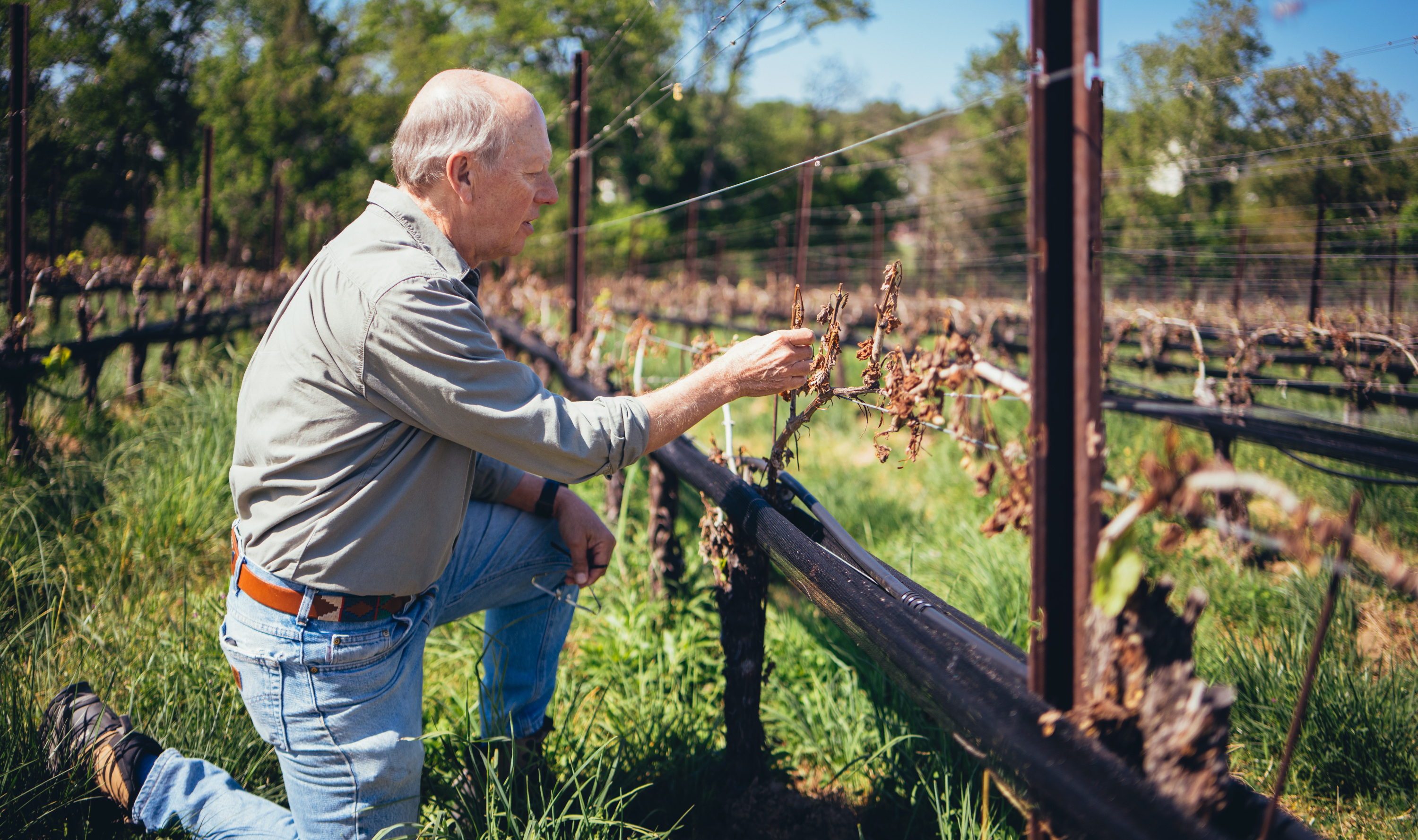 At The Vineyards at Dodon, in a normal year, they’d expect to produce about 40 to 45 tons. Due to the frost, they are expecting only 12 to 15 tons. This roughly equates to a loss of 2,000 cases of wine, an incredible economic hit to a small vineyard like theirs.
In the week after the frost, Maryland Farm Bureau sent around an internal survey to assess the damage, and it paints a stark picture. The most common damage estimate reported by farmers was "Around 100%," with over a quarter of affected respondents fearing a total loss of their season's yield.
The survey highlights that specialty crops, particularly grapes, bore the brunt of the damage. Other hard-hit varieties included tree fruits like apples, peaches, and cherries, as well as early vegetables and berries. While farm sizes varied, the majority of respondents were small-scale operations farming between 1 and 50 acres. These growers now face a massive economic hurdle, with individual projected losses ranging from a few hundred dollars to upwards of $500,000, underscoring the severe financial strain this uncharacteristic weather event has placed on the local agricultural community.
Looking ahead, farmers in Maryland are looking for a USDA Secretarial Disaster Declaration. This formal designation is issued when the U.S. Secretary of Agriculture determines that a county has suffered a production loss of at least 30% in a single crop due to a natural disaster. This designation is essential because it serves as the primary mechanism to unlock federal financial assistance that is otherwise unavailable, bridging the gap between state-level recognition and federal resource allocation. Farmers can help move this process along by reporting their losses to their local Farm Service Agency office.
In the short term, growers are pivoting. Mike is planning on planting more winter squash and pumpkins, as well as summer produce. It’s too early to say what the apple market will look like. He’s also planning to work with a farmer in South Carolina to provide peaches and berries to his market customers. But as a farmer through and through, it pains Mike to be bringing in produce and not be able to grow his own fruit for his own customers.
“It’s just something that I like to do,” Mike says with a giggle. “I guess I was born to do it. That’s the way it is.”
After witnessing the impact of such an extreme weather event, Tom feels a renewed sense of responsibility to the environment. He views these erratic seasons as an environmental red-flag, signalling that farmers should lean further into conservation-minded farming, focusing on practices that promote soil health and help reverse the damage of an uncertain climate.
Both farmers agree that in this turbulent time, it's incredibly incumbent upon consumers to take the time to patronize their local farms. Although they realize that this may not be easy given the circumstances.
“They’re going to have a reason not to come,” says Mike. “There should be quality fruit there, but maybe just not as much, maybe a little more expensive.”
But that should not stop Marylanders from visiting their neighbors. Tom stresses how the farming community is indeed a community. And together, we can make it through this storm together.
Tom summarizes it well with a smile: “It’s going to be a tough year for us, we really look forward to the community coming to visit.”